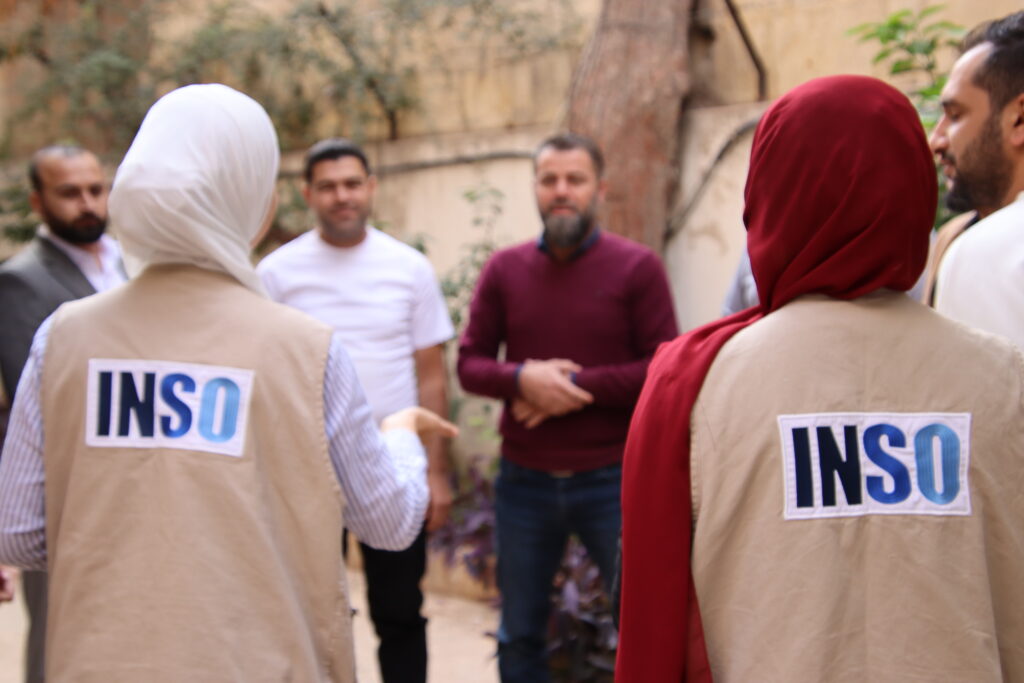
On 8th December 2024, the Assad regime fell following a ten-day offensive led by Hayat Tahrir al-Sham (HTS) ushering in a period of significant political transition. After years of restrictions, access across the country opened in an unprecedented way. As organisations adapt to this evolving context, INSO is providing the support they need to operate safely and to keep assistance flowing to those who need it most.
“We were in Damascus about 3 days after the [regime] collapse” says Antonio Salgado Delgado, Country Director INSO Syria “by January we had set up a Liaison Office in Damascus and began to provide support to NGOs seeking to begin operations here. At the beginning, we had 20 to 30 NGOs reaching out daily.” This change in the access landscape led many NGOs to re-structure their programmes. This was also the case for INSO, which, prior to December 2024, had operated solely from North-East Syria, Lebanon, Gaziantep, and Amman, but has subsequently relocated much of the Syria Country Office from Amman to Damascus, opening additional offices in Aleppo, and relocating its NES office from Hasakeh to Qamishli.
Improved Access and Mobility
Many NGOs have experienced significant changes to their operations over the last year. Since December 2024, many NGOs have merged offices, removing firewalls that had become a hallmark of the Syria response where NGOs were operating across multiple areas of control and allowing greater collaboration and contact between various regions of Syria.
For some NGOs, this shift allowed NGOs to establish programmes within Syria for the first time. One such NGO is Nonviolent PeaceForce. Before December 2024 they did not have programmes within Syria but since the shift in the context have started a scoping mission prompted by the “ability to access the entire country, I know for many organisations, it’s like, okay, you don’t have to pick sides anymore.” shared Nic, Team Leader for the Syria Mission, Nonviolent PeaceForce.
Alongside the improved access within Syria, NGOs have also seen a change in their ability to enter and get staff into the country. “The improvement in the visa processes also allowed us to move staff from Lebanon and Jordan to Syria after the fall of the regime” adds Fuad Deputy Country Director for Humanitarian Access and Security for Premier Urgence Internationale. another of INSO’s NGO partners.
Despite the predominantly improved access landscape, challenges do still exist. Whilst NGOs often cite that they have been able to reach new areas such as Raqqa, and that access to Northeast Syria has greatly improved, other areas such as As-Sweida have proved more challenging since the events in July 2025.
NGOs are experiencing increased threats along the routes into As-Sweida on their activities and purpose. This has had a spillover effect of NGO staff feeling uneasy at travelling from As-Sweida to Damascus due to the reported risk in the area. In addition to checkpoints, many NGOs work in hard-to-reach areas, where telecommunications coverage is limited and infrastructure may be poor. “For us, our staff have to travel over 1hr30 to reach our sub-offices across areas without coverage and sometimes you see no other vehicles. We stick to main roads, but it isn’t ideal” explains Marianne, Head of Mission for Intersos Syria. “I always go back to INSO if I need to change a route for any reason” she adds.
INSO is working to support NGOs to navigate these challenges though timely access assessments and alerts, helping NGOs plan routes, anticipate risks, and maintain continuity. As part of this, INSO conducts regular road assessments that map checkpoints, incident hotspots, and changing road conditions. This allows NGOs to select safer routes and adjust movement plans in real time.
“For internal movements we need to have a reliable product with road and route assessments, and without INSO this wouldn’t be possible” shares Fuad. The road assessments aren’t the only tool NGOs rely on when deciding if an area is safe to travel to, INSO’s incident lists have also been important in supporting NGO area assessments. “Without having these, we would need to collect the information from other NGOs but they’re not always available or have the capacity to support on doing analysis and giving a background check on areas” explains Fuad.
Bureaucratic Challenges and Changes in Coordination
Changes to the approval process for NGO projects since December 8th, 2024, has created additional uncertainty for many NGOs, impacting aid delivery. The introduction of new requirements alongside a lack of clarity on the various roles of different ministries and bodies has sometimes created delays and concern among NGOs.
As such it has been critical for NGOs to share information and align approaches. INSO’s coordination forums give them a space to compare notes on approvals, access barriers, and emerging risks.
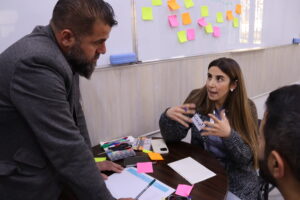
INSO monthly roundtables across Damascus, Aleppo, and North-East Syria provide NGOs the opportunity to come and talk together. “We’ve learnt a lot from understanding the challenges of other NGOs” says Nic. For Nonviolent PeaceForce INSO’s reports are also helpful in giving an insight into what other NGOs are experiencing, “[the thematic reports] are really helpful just to understand what access issues other organisations are having, what security issues anybody on the ground is dealing with as well,” shares Nic.
Operational Challenges and Risks
Outside of the access landscape, the types of incidents humanitarians are experiencing have somewhat changed in the last year. For Marianne “the dynamic in the country is totally different. The types of incidents we witness now is totally different compared to before the fall of the regime.” Many NGOs are reporting an increase in incidents resulting from a rise in criminality, including thefts of equipment from projects sites and a greater caution around personal safety.
For one NGO, after January most of their health centres were looted or damaged. These centres were providing critical care to the communities, but the damage was significant, with windows and doors and even electrical components stolen. The biggest negative impact of such incidents is obviously on those people in need, whose access to healthcare and other critical services is removed. Increased criminality also impacts the personal safety of staff. Many NGOs, in response to rising criminality, now implement buddy systems when out at night, and unofficial curfews due to the risks of theft and kidnap. INSO tracks these incident trends and shares analysis on crime-affected areas, helping NGOs update Standard Operating Procedures (SOPs) and adapt security measures accordingly.
Not all staff experience the same risks. Ethnic tensions, particularly following the events in Sweida and the Coastal areas earlier in the year, alongside conflict between returnees and the host community, also may create risks for specific staff and such concerns remain at the forefront of many NGOs’ minds. “The regime legacy of divisions is still there, and if somehow there’s not some practical engagement on bringing communities together to try and increase trust, then it will be really tricky for the context moving ahead” shares Nic, reflecting on the work needing to be done on social cohesion.
For NGOs already struggling under funding cuts, particularly following USAID, there is sometimes a struggle in the capacity to monitor the trends impacting humanitarian safety, such as rising tensions within communities. “We’re not able to have a security focal point due to funding. As head of mission, I’m head of security. I don’t always have time to do all the analysis, that’s why we need INSO” says Marianne.
For Nonviolent PeaceForce, INSO’s thematic reports have been a “really quick and accessible way to dig into specific conflict dynamics and really and also see the overview and the trends of where things are going. So, I think rather than us having to do it, INSO is doing it and helping inform what we’re all seeing from other people, [it] saves me days of personal research. For as long as I can remember INSO has been the go-to for safety information, so I don’t know where we would go if not for INSO.”
Another change that has been impacting NGOs is a rise in more indiscriminate gunfire since the fall of the regime. “Pre regime the frontlines were fixed” explains Fuad “we knew where they were, and we knew where to avoid.”
However, whilst frontlines may have disappeared, their legacy remains. Unexploded Ordinance, often known within the humanitarian sector as UXOs and Explosive Remnants of War (referred to as ERW) continue to pose a threat to communities and NGOs alike.
“UXO incidents are increasing drastically. It’s really draining, we lose a lot of children, we do awareness sessions on UXO and de-mining. In every centre you see posters and you try to explain but it’s not manageable. Syria is very big and the number of partners working on mining is very little” shares Marianne, “I follow INSO’s UXO reports, looking at the areas we work in, this is super helpful” she adds.
“Our team is focused on the activities, INSO can give us more situational awareness and give us the information on safety and access we need that could otherwise be missed” adds Fuad. Recently, PUI were working in an area when Fuad received an alert from INSO on an incident that his team had not anticipated. Whilst they were able to keep working, the alert allowed them to prepare in case of a deterioration of the situation.
As Syria moves through this period of transition, humanitarian organisations face both new opportunities and ongoing challenges. Greater access has made it easier to reach communities, but issues such as security risks, bureaucratic delays, and rising criminality continue to affect operations. INSO works alongside NGOs to provide practical support and reliable information that helps them plan safely and keep aid flowing. For donors and partners, supporting INSO means strengthening the ability of humanitarian actors to deliver assistance where it is needed most.
If you’re an NGO operating in Syria and would like to access INSO’s free safety and access services, you can register as an INSO partner via our website or via info@syr.ngosafety.org
INSO Syria is gratefully supported by the European Commission (ECHO), Swiss Agency for Development and Cooperation, and the United Kingdom’s Foreign, Commonwealth & Development Office