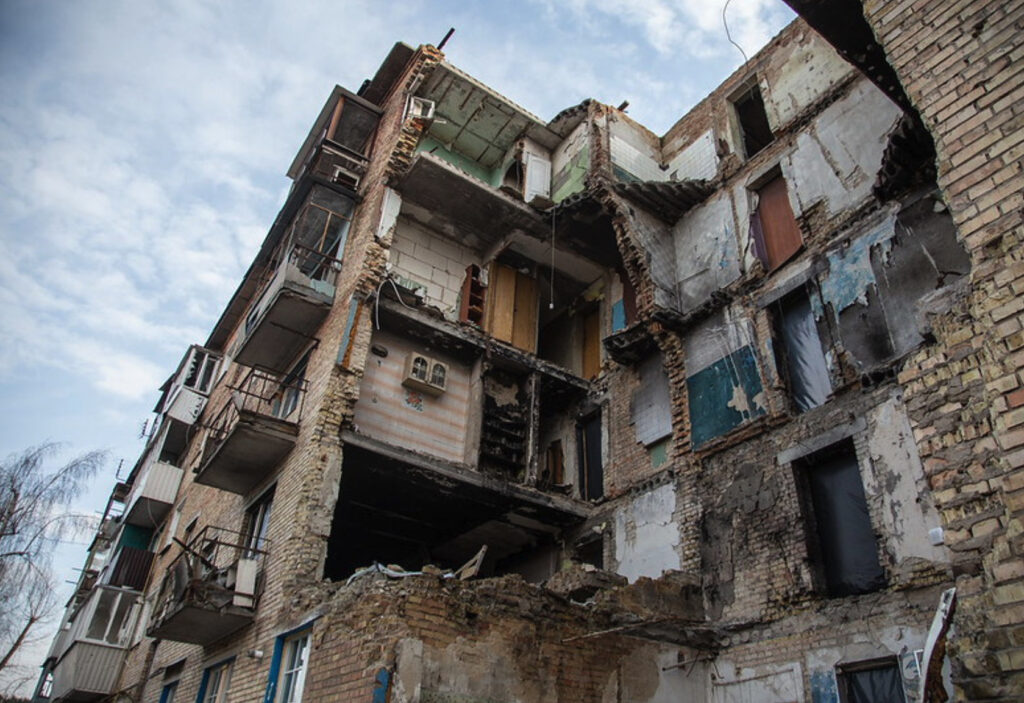
Four years on, aid workers continue to be targeted and killed despite the existence of international legal frameworks intended to protect civilians and humanitarian personnel. These incidents are not isolated. They form part of a broader pattern of risk exposure in a conflict environment that has evolved faster than existing security risk management and protection mechanisms.
This pattern reflects a broader deterioration in the humanitarian safety and access landscape. As the full-scale war in Ukraine enters its fifth year, the humanitarian system is experiencing its deadliest period since records began, with violations in Ukraine being shaped by and contributing to a wider global breakdown in respect for international norms.
The Widening Protection Gap
International Humanitarian Law (IHL) is designed to protect civilians and those not directly participating in hostilities, including humanitarian personnel. These protections are foundational to the safe delivery of humanitarian assistance.
However, since the start of the full-scale invasion of Ukraine, belligerent actors have demonstrated limited respect for these norms, demonstrated by the 35 humanitarians that have been killed and the 127 that have been injured since 20221.
Furthermore, data on the security incidents affecting aid organisations, demonstrates a lack of adherence, in particular by Russian Forces, to the principle of distinction under international humanitarian law that requires parties to the conflict to distinguish between civilians and combatants and prohibits the direction of attacks against civilians. INSO data highlights that in 40% of incidents affecting aid organisations, the vehicles were clearly marked as belonging to humanitarian actors.2
These figures indicate that visibility or misidentification do not fully account for incident trends, highlighting the need to reconsider the use of visibility as a mitigation measure and consider a wider range of operational and intentional factors, including scenarios where deliberate targeting has been evidenced.
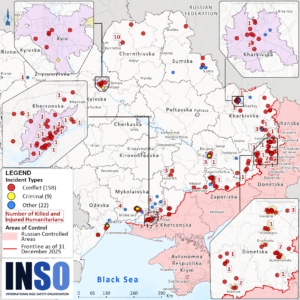
Humanitarian Incidents 2025
Evolving technology is changing the safety and access landscape for NGOs
Ukraine has become a testing ground for the rapid development of weapons systems and battlefield tactics, most visibly illustrated by the accelerated evolution of drones.
In 2024 INSO recorded 13,548 improvised combat UAV attacks, in 2025 this number increased to 31,950 attacks [with more than one drone used per attack, the likely number of drones used by both sides is estimated at several million annually]. This has resulted in an increase in civilian casualties, with 227 civilians killed and 1,815 injured in 2024 compared to 554 civilians killed and 3,033 injured in 20263. As a result, the threat profile for humanitarians operating in frontline areas has been evolving in parallel with this rapid proliferation of drones.
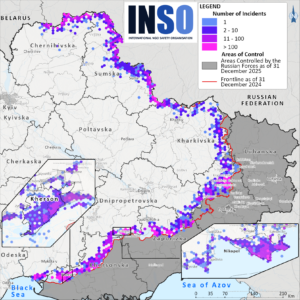
Short-range combat UAV strikes in 2025
Improvised Short-Range Combat Uncrewed Aerial Vehicles (ICUAVs) – a specialised type of drone, modified to carry explosives, have become the second most used weapons system in Ukraine after artillery. Increasingly, these drones are being used to attack humanitarian actors, leading to higher and often fatal risks for aid workers. Since the beginning of Russia’s full-scale invasion, INSO recorded at least 94 incidents involving attacks on humanitarians with ICUAVs, resulting in seven NGO staff killed and 28 injured.

Shrinking Warning Windows
Furthermore, the use of ICUAV’s significantly also shortens the window during which civilians can seek shelter or take mitigation measures to protect themselves from harm. In most cases, the time available during a ICUAV attack, the time available to seek shelter is typically only 5-10 seconds once the drone initiates it attack. With no protected corridors and ongoing disregard for the principle of distinction, NGOs continue to face a constrained risk‑management space. Especially as visibility can no longer be assumed to reduce risk and no physical protection measures are available to humanitarian organisations operating in frontline areas. Exposure to ICUAVs therefore leaves NGOs with few viable options beyond limiting their presence and reducing aid delivery or accepting high residual risk. The resulting pressure has driven growing interest in technological counter‑measures, despite the reality that several of these systems may put NGOs at further risk.
“Drones have evolved into a key factor shaping the security of humanitarian activities and humanitarian access in Ukraine. The rapid and continuous development of unmanned aerial vehicles or UAVs challenges organisations to adapt to this ever-changing landscape. This requires significant operational flexibility and calls into question the effectiveness of conventional mechanisms, such as clearly visible humanitarian logos on vehicles etc. As a result, in face of growing risks, some organisations opt for self-imposed access restrictions. INSO is playing a crucial role in staying on top of these technological developments, anticipating how they might affect humanitarian response and what measures will be required from the organisations to continue providing assistance to those in need.” says Vasyl Piskunov, Safety Advisor, INSO Ukraine
Unequal Exposure of National NGOs compared to International NGOs
Locally recruited staff comprise approximately 93%4 of global humanitarian worker incident victims. For National NGOs (NNGOs) in Ukraine, this trend is further exacerbated by the practices of many international organisations, which can unintentionally shift a disproportionate share of operational risk onto national NGOs and volunteers. NNGOs and volunteers are frequently expected to sustain access, conduct frontline assessments, and deliver assistance in areas where INGO staff are restricted from operating due to policies related to ICUAV exposure, frontline proximity, or the absence of safe humanitarian corridors. Yet the humanitarian system often puts this higher burden on national actors whilst not supporting them with the necessary resources to absorb the unequal risk they are exposed to. The result is a form of structural risk transfer in which NNGOs bear the highest level of residual risk while having the least support to manage it safely.
INSO’s Role: Data, Analysis, and Training
In this environment, timely, credible, and independent security information is critical. INSO supports humanitarian actors in Ukraine by systematically collecting and analysing incident data, tracking emerging threats, and translating the risk environment into actionable insights. This enables NGOs, particularly national and local partners to make informed decisions about access, programming, and staff safety in a rapidly evolving conflict.
“The constantly changing security environment affects our ability to deliver humanitarian assistance in Sumska Oblast.” shares Andrii Terokhin, DRC Area North Office Safety Team Leader. “INSO’s products, especially their timely, practical, and customised mapping products, help us better understand what is happening on the ground and adjust our plans accordingly. This information is essential for making informed decisions and managing risks effectively. Without INSO’s support, we would not have access to the same reliable and up-to-date security analysis and GIS tools. It would be extremely difficult to find an alternative that offers comparable coverage and relevance for our operations.”
Localised, real‑time analysis of frontlines and patterns regarding the evolving use of UAV and the threats they pose, provides field teams with a level of situational awareness they cannot generate alone. By ensuring that the overexposure of Ukrainian staff is fully represented within the analytical ecosystem, an approach reinforced by INSO’s latest research on security coordination and localisation, INSO helps reduce structural risk transfer and supports more equitable and responsible operational planning. Indeed, responsible humanitarian action requires confronting how risk is distributed, and who is expected to absorb it.
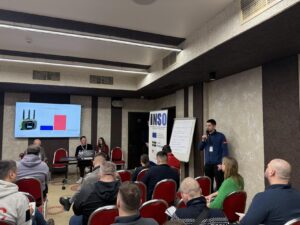
INSO Roundtable Ukraine
At the same time, the integration of traditional Security Risk Management practices, such as enhanced geospatial analysis, automated threat mapping, dynamic access routing, relevant and appropriate staff training, the development of robust Standard Operating Procedures and embedded risk‑informed decision‑making, strengthens Duty of Care by giving organisations the evidence base they need to make informed, choices about when, where, and how to operate safely. Together, with training and workshops also provided by INSO, these capabilities, allow humanitarian actors to maintain principled presence while better protecting the staff who deliver lifesaving assistance.
“As Ukraine enters the fifth year of full-scale war, the risks facing humanitarian workers and other civilian responders continue to evolve in complexity and scale. Their deaths are neither inevitable nor acceptable and cannot be normalised as a feature of the operating environment. In a context where reliable safe corridors are absent, distinction is increasingly difficult to maintain, and visibility alone offers no meaningful protection, rigorous data collection and credible analysis remain essential for understanding harm, challenging impunity, and reinforcing the norms designed to safeguard civilians and those who assist them. Sustained accountability, grounded in accurate reporting and evidence-based risk analysis, is critical to ensuring that humanitarian action remains principled and that the individuals who deliver lifesaving assistance are afforded the protection they are due under international humanitarian law.” Says Ian Spence, Country Director, INSO Ukraine.
Without consistent attention to how aid workers are being harmed, and why, the space for principled humanitarian action will continue to shrink. We encourage Member States to uphold and operationalise their commitments under the Political Declaration on the Use of Explosive Weapons in Populated Areas5, and to address the growing risks posed by ICUAVs in civilian environments. Effective implementation requires not only greater restraint in the use of explosive weapons in populated areas, but also stronger measures to ensure distinction, facilitate safe humanitarian access, and protect the personnel who deliver lifesaving assistance. Increased support to national responders and sustained humanitarian funding are essential to ensuring that civilians in Ukraine continue to receive aid in accordance with international humanitarian law and the humanitarian principles.
Humanitarian organisations can further strengthen their situational awareness and incident preparedness by engaging with INSO’s services. NGOs active in Ukraine are encouraged to register with INSO to access real‑time alerts, analytical reporting, training opportunities, and safety coordination platforms designed to support principled and secure humanitarian operations.
INSO Ukraine is gratefully support by The European Commission (ECHO), The Swedish International Development Agency (Sida), The Swiss Agency for Development and Cooperation (SDC).
If you are an NGO operating in Ukraine and would like to benefit from INSO’s free safety and access services, you can register as a partner via our website.
1 INSO CHDC
2 INSO CHDC
3 In 35% of cases the vehicles bore no markings, in 24% of cases information on markings was unavailable or the marking was not clear, INSO CHDC
4 INSO CHDC
5 https://ewipa.org/the-political-declaration